| |
| Wednesday, 18 November 2026 |
| THE CURIOUS HISTORY OF CHRISTMAS FOOD |
| PETER ROSS |
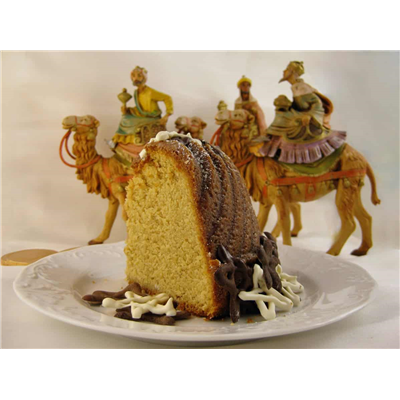 |
The foods we eat at Christmas have a long, curious and visually spectacular history. This lecture narrates and illustrates that history from Medieval boar’s head and brawn, by way of highly decorated seventeenth century mince pies to the almost forgotten Twelfth Night Cake. Medieval illuminated manuscripts, paintings and prints from the seventeenth to the nineteenth centuries, and illustrations from cookery books provide us with images of some of the lost glories of the British Christmas feast. Peter Ross has a BA in the History of Art, an MA in London History, and a PhD in the cultural history of the early eighteenth-century criminal, Jack Sheppard. Until 2023, he was the Principal Librarian at the City of London’s Guildhall Library. He is also a Fellow of the Society of Antiquaries. Peter has appeared on television and radio as a consultant on crime in eighteenth-century London, the history of English food, and Shakespeare’s First Folio. Peter’s The Curious Cookbook, Viper Soup, Badger Ham, Stewed Sparrows, and a Hundred more Historic Recipes was published in 2012 by the British Library and subsequently published in the US, China and Taiwan. Peter is currently engaged in writing a book - Insatiable Appetites: Eating Out in Georgian London to be published by Bodleian Library in May 2026. |
|
| Wednesday, 20 January 2027 |
| RAVENNA: CITY OF MOSAIC AND MARBLE |
| SALLY DORMER |
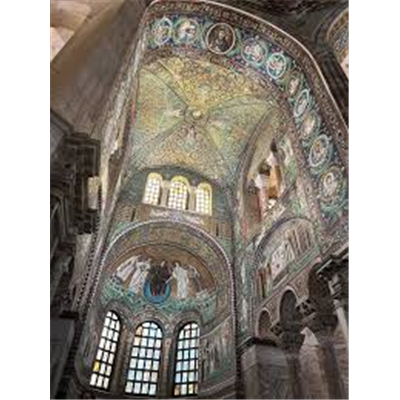 |
The modest city of Ravenna, situated near the Adriatic coast in north-eastern Italy, hides an illustrious past filled with glittering treasures. In 402 A.D. Honorius, the Roman Emperor, moved the capital of the Western Roman empire from Milan to Ravenna, and furnished the city with churches clad in glistening mosaics and coloured marbles. Ravenna flourished after the demise of the Western Roman Empire under King Theodoric as capital of the Ostrogothic kingdom, who enriched it with further splendid mosaic-filled monuments. In 540 the Byzantine Emperor Justinian conquered Italy and chose Ravenna as the western capital of his Byzantine empire instigating yet another lavish period of patronage. The Lombards assumed control in 751 and decline followed, but ironically this ensured the survival of Ravenna’s glorious heritage. J.R.R. Tolkein and Oscar Wilde were inspired by Ravenna’s Early Christian and Byzantine monuments; their beauty, and complex layers of meaning continue to captivate today. Sally is a Lecturer and tutor for the Early Medieval Year Course at V&A. Dean of 'European Studies' for 2 US Universities. Freelance lecturer for The Art Fund. Study tours, cruises and tour groups. BA (History) University of Durham; PhD (Medieval Manuscript illumination) and MA (Medieval History of Art) Courtauld Institute. |
|
| Wednesday, 17 February 2027 |
| L S LOWRY |
| ROSALIND WHYTE |
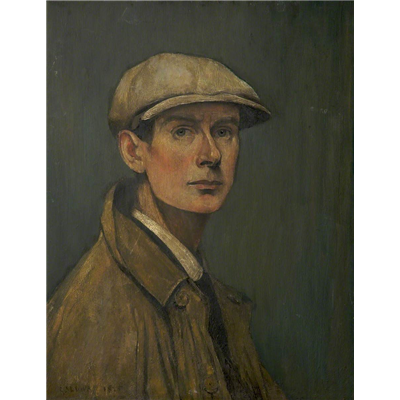 |
Lowry produced some of the country’s most original and distinctive paintings, creating a social document of a now bygone industrial age. This lecture features many of those well-known industrial scenes, alongside seascapes and portraits; works that are less readily associated with him. The lecture explores his life in and around Salford, his attitudes and his healthy disregard for the trappings of fame and fortune that were eventually to be his. An exploration of a life and a body of work full of surprises and contradictions. Rosalind has a BA and MA from Goldsmith’s College, and an MA (distinction) from Birkbeck College. She is an experienced guide at Tate Britain, Tate Modern, the Royal Academy and Greenwich. She lectures at the Tate, to independent art societies and on cruises. |
|
| Wednesday, 17 March 2027 |
| FROM DOWNTON TO GATSBY: JEWELLERY AND FASHION FROM 1890 TO 1929 |
| ANDREW PRINCE |
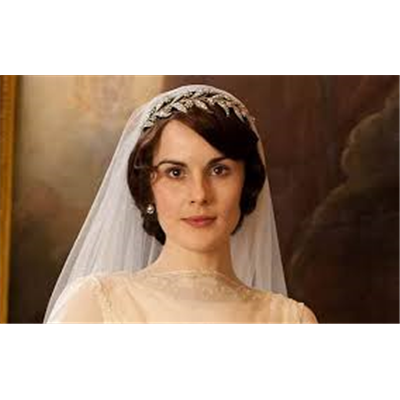 |
For the series and film Downton Abbey, Andrew was commissioned to make many jewels for the main characters and this inspired him to create a talk based on this unique period. Jewellery and Fashion are often seen as two entirely separate and distinct fields of design, but this is very far from the case. In his talk, Andrew guides you through the extraordinary decades and events between 1890 and 1929, where the great couturiers collaborated with the finest of jewellers to produce jewels and clothes of outstanding quality and glittering opulence. Along with this, he illustrates the clients and patrons who commissioned the jewels and shows how they were worn with their sumptuous gowns. Andrew Prince has had a passion for jewellery since he was a small child. Andrew started work in London’s Bond Street, working for The Antiques Roadshow expert Ian Harris. Under his guidance, Andrew developed an appreciation for jewels that were valued for their quality of design and craftsmanship, rather than for how much the stones in the piece were worth. He then joined the renowned contemporary jeweller Elizabeth Gage and worked with her on the design and production side. Through her and her private collection, Andrew was able to see and handle rare and extraordinary stones with names such as Sphene, Andalusite, Spinel and Dioptase, many of which are far rarer than diamonds. In 2012, he was chosen by the creators of Downton Abbey to supply a large collection of jewellery for the third series. The characters played by Maggie Smith, Shirley Maclaine, Elizabeth McGovern and Michelle Dockery were all adorned with elegant tiaras, combs, earrings and necklaces designed and created by Andrew Prince. |
|